Early Signs of Stroke Everyone Should Know
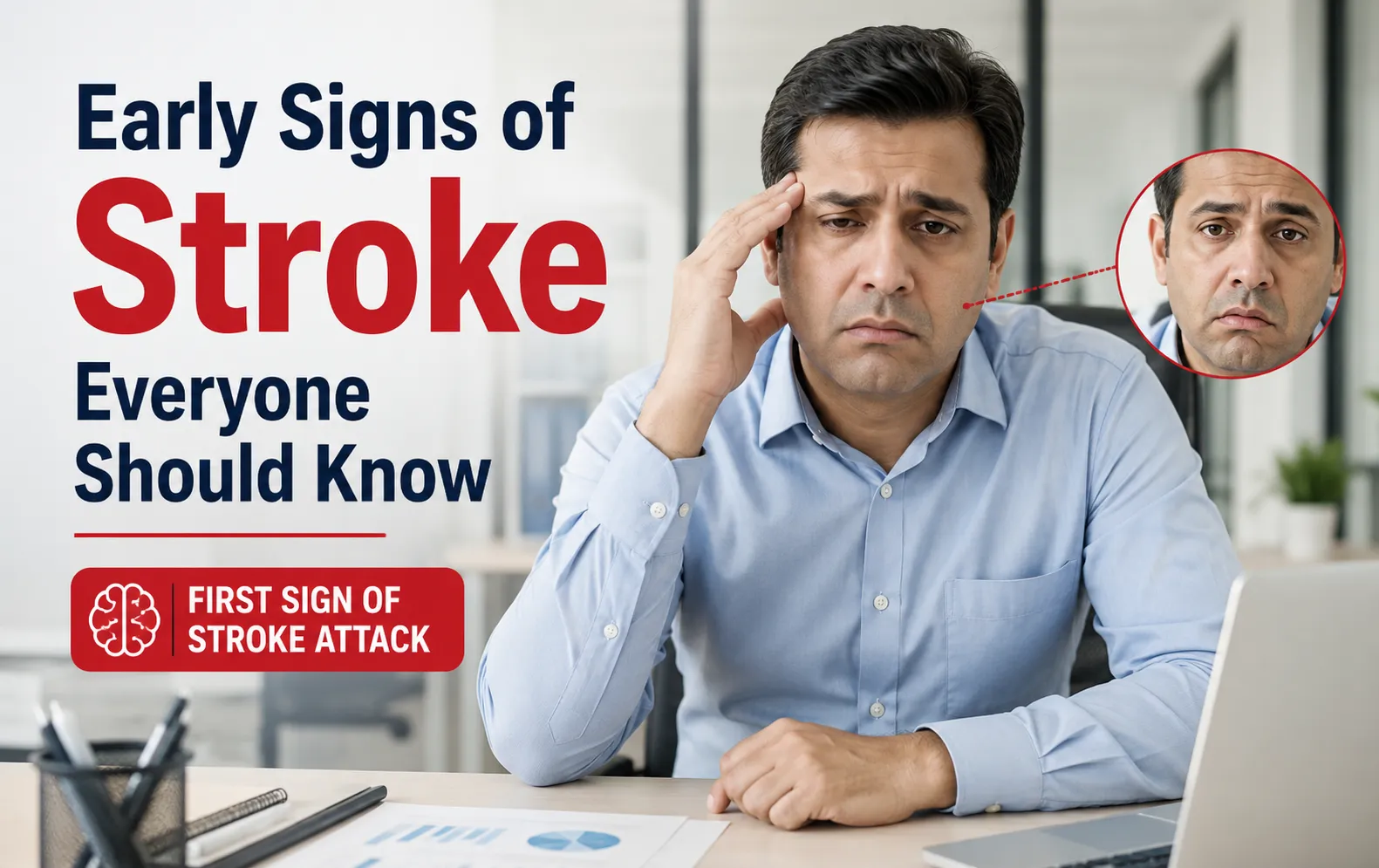
Early Signs of Stroke Everyone Should Know
A stroke is one of the most serious medical emergencies that can occur without warning. Every minute after a stroke begins, nearly 1.9 million brain cells are lost, making immediate medical treatment essential. Unfortunately, many people ignore the early warning signs or mistake them for temporary weakness, fatigue, or dizziness. Delaying treatment can lead to permanent brain damage, disability, or even death.
The good news is that recognizing the symptoms early and reaching a hospital quickly can significantly improve recovery and save lives.
At Care and Cure Hospital, Maninagar, our 24×7 Emergency and Critical Care Team is always prepared to provide rapid diagnosis and immediate treatment for patients experiencing stroke symptoms. Knowing the warning signs could help save your own life or the life of someone you love.
What is a Stroke?
A stroke occurs when the blood supply to a part of the brain is interrupted or reduced. Without adequate oxygen and nutrients, brain cells begin to die within minutes.
There are two major types of stroke:
Ischemic Stroke
The most common type, caused by a blockage in a blood vessel supplying the brain.
Hemorrhagic Stroke
Occurs when a blood vessel in the brain bursts, causing bleeding inside the brain.
Both conditions require immediate emergency medical care.
Early Warning Signs of Stroke
Recognizing the symptoms early allows doctors to begin treatment before permanent brain damage occurs.
1. Sudden Weakness or Numbness
One of the earliest signs is sudden weakness or numbness affecting:
- Face
- Arm
- Leg
This usually affects only one side of the body.
If someone suddenly cannot lift one arm or complains of numbness on one side, seek emergency care immediately.
2. Face Drooping
Ask the person to smile.
If one side of the face droops or appears uneven, it may indicate a stroke. This is one of the easiest signs to identify.
3. Difficulty Speaking
Stroke can suddenly affect speech.
The person may:
- Speak unclearly
- Slur words
- Use incorrect words
- Be unable to speak at all
- Have difficulty understanding others
Even temporary speech problems should never be ignored.
4. Sudden Vision Problems
Stroke can affect vision in one or both eyes.
Symptoms include:
- Blurred vision
- Double vision
- Partial vision loss
- Sudden blindness in one eye
5. Severe Headache
A sudden, severe headache unlike anything experienced before may indicate bleeding in the brain.
Seek emergency treatment immediately, especially if accompanied by vomiting or confusion.
6. Dizziness and Loss of Balance
A stroke can suddenly affect coordination.
Watch for:
- Difficulty walking
- Sudden dizziness
- Loss of balance
- Frequent falls
7. Sudden Confusion
Some patients suddenly become confused.
They may:
- Forget familiar people
- Be unable to answer simple questions
- Appear disoriented
- Have difficulty following conversations
Remember the FAST Test
The FAST test helps identify a stroke quickly.
- F – Face: Ask the person to smile. Is one side drooping?
- A – Arms: Ask them to raise both arms. Does one arm drift downward?
- S – Speech: Ask them to repeat a simple sentence. Is their speech slurred or unusual?
- T – Time: If you notice any of these signs, call emergency medical services or reach the nearest hospital immediately.
Every minute matters during a stroke.
Who is at Higher Risk of Stroke?
Anyone can experience a stroke, but certain conditions significantly increase the risk.
You may be at higher risk if you have:
- High blood pressure
- Diabetes
- High cholesterol
- Heart disease
- Irregular heartbeat (Atrial Fibrillation)
- Obesity
- Smoking habit
- Excessive alcohol consumption
- Family history of stroke
- Age above 55 years
Regular health check-ups can help detect and manage these risk factors early.
What Should You Do if Someone Has Stroke Symptoms?
If you suspect a stroke:
- Call for emergency medical help immediately.
- Note the time when symptoms started.
- Keep the person calm and seated safely.
- Do not give food, water, or medication unless advised by a doctor.
- Do not wait for symptoms to improve on their own.
- Reach a hospital with emergency and critical care facilities without delay.
Prompt treatment can greatly reduce brain damage and improve recovery.
Why Choose Care and Cure Hospital for Emergency Stroke Care?
A stroke requires immediate diagnosis and expert medical intervention. At Care and Cure Hospital, Maninagar, we understand that every minute counts. Our experienced emergency physicians and critical care specialists work quickly to evaluate patients and begin life-saving treatment without unnecessary delays.
From emergency stabilization to advanced monitoring, our multidisciplinary team focuses on providing comprehensive care for stroke patients while minimizing complications and supporting faster recovery.
Patients from Maninagar, Isanpur, CTM, Khokhra, Ghodasar, Shah Alam, Hatkeshwar, Vatva, and nearby areas trust Care and Cure Hospital for timely emergency care and compassionate treatment.
Advanced Emergency Care at Care and Cure Hospital
Our hospital offers comprehensive facilities for managing stroke and other medical emergencies:
- 24×7 Emergency Services & Trauma Center
- Immediate ECG and Diagnostic Services
- Advanced ICU with Continuous Monitoring
- Experienced General Physicians & Critical Care Specialists
- Fully Equipped In-house Pathology Laboratory
- Digital X-Ray & Diagnostic Support
- NABH Accredited Hospital
- Cashless Mediclaim Facility
- Multispeciality Care Under One Roof
- Easily Accessible Location in Maninagar, Ahmedabad
Don't Ignore the Warning Signs
Stroke can happen suddenly, but recognizing the early symptoms and acting quickly can make a life-changing difference.
If you or someone around you experiences sudden weakness, speech difficulty, facial drooping, severe headache, or vision changes, do not delay seeking medical care.
The experienced emergency team at Care and Cure Hospital, Maninagar is available 24×7 to provide prompt evaluation, emergency treatment, and compassionate care when every second matters.
Frequently Asked Questions (FAQs)
1. What are the first signs of a stroke?
The earliest signs include sudden facial drooping, weakness in one arm or leg, difficulty speaking, vision problems, severe headache, and dizziness.
2. What is the FAST test for stroke?
FAST stands for Face, Arms, Speech, and Time. It is a simple method to quickly identify stroke symptoms and seek emergency medical care.
3. Can young adults have a stroke?
Yes. Although strokes are more common in older adults, younger individuals with high blood pressure, diabetes, smoking habits, obesity, or certain heart conditions can also experience a stroke.
4. Is every stroke painful?
No. Many strokes occur without pain. Symptoms such as sudden weakness, speech difficulty, facial drooping, or vision changes are often more common than pain.
5. When should I go to the hospital for stroke symptoms?
Immediately. Do not wait for symptoms to disappear. Early treatment significantly improves recovery and reduces the risk of permanent brain damage.
Care and Cure Hospital
Address: Besides Nilamkunj Society, Near Gokulnathji Haveli, Mira Cinema Cross Road, Bhairavnath, Shah Alam Road, Maninagar, Ahmedabad – 380028
OPD & Appointments: +91 7861813100