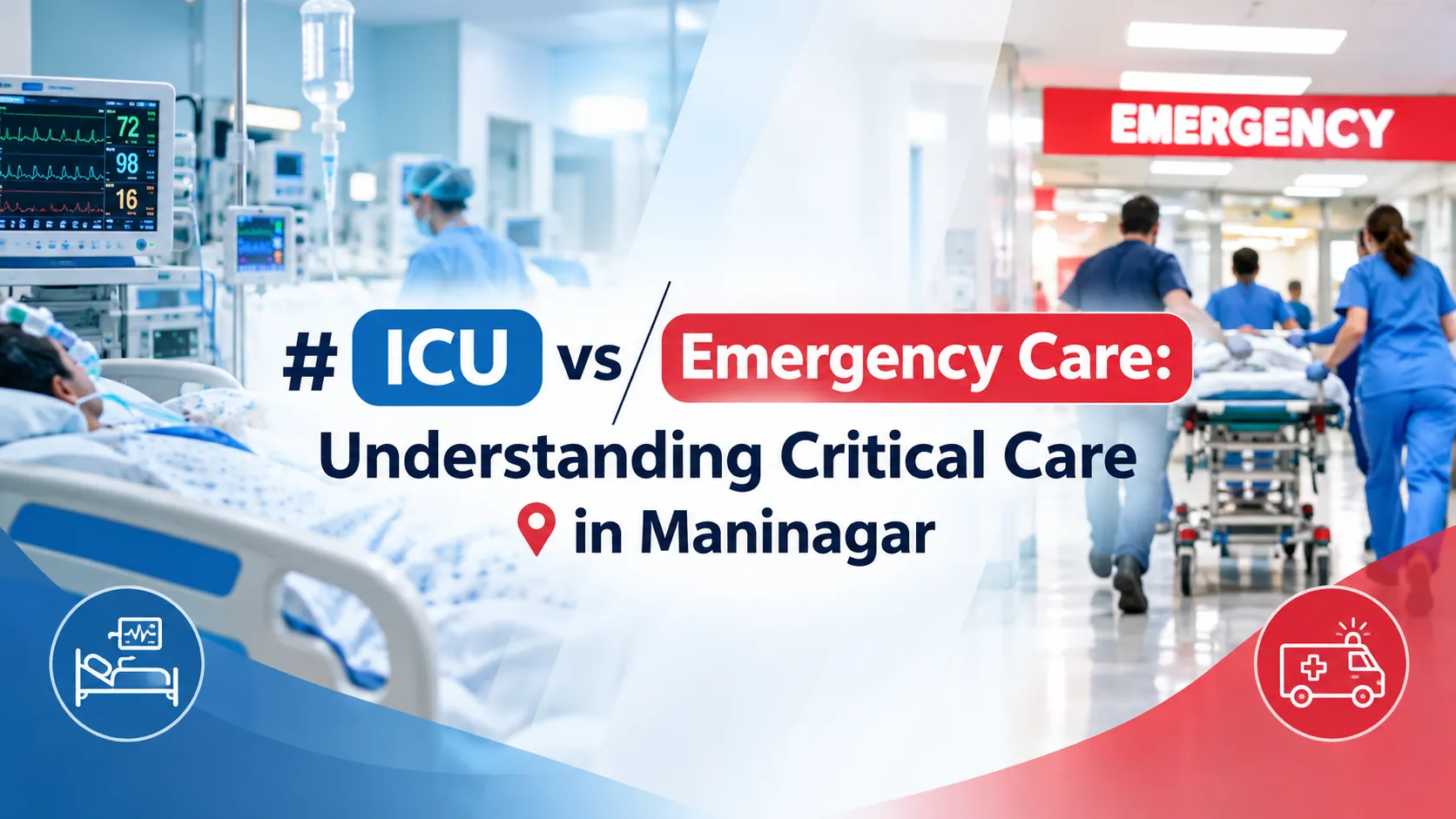
ICU vs Emergency Care: What's the Difference and When Does a Patient Need Critical Care?
When a medical emergency occurs, families often face an important question: Should the patient go to the Emergency Department, or do they need ICU care?
Although Emergency Care and the Intensive Care Unit (ICU) are closely connected, they serve different purposes. Emergency Care focuses on the rapid assessment, diagnosis, stabilization and immediate treatment of sudden illnesses and injuries. The ICU is designed for patients who are critically ill and require continuous monitoring, intensive treatment or advanced life-support.
For patients and families in Maninagar and nearby areas of Ahmedabad, understanding the difference between Emergency Care and ICU treatment can help them seek medical attention without unnecessary delay.
At Care and Cure Hospital, Maninagar, emergency and critical-care services work together to provide timely assessment, stabilization and appropriate escalation of care when a patient's condition requires immediate intervention.
What Is Emergency Care?
The Emergency Department (Emergency Room) is usually the first point of medical care when someone develops a sudden, serious or potentially life-threatening health problem.
Emergency teams focus on quickly assessing the patient's condition, identifying immediate medical concerns, beginning appropriate treatment and determining the next level of care.
Patients who require intensive monitoring or advanced treatment may first be stabilized in the Emergency Department before being shifted to the ICU when medically required.
Common Situations That Require Emergency Care
You should seek immediate medical attention for conditions such as:
- Sudden chest pain or pressure
- Difficulty breathing
- Suspected heart attack
- Stroke symptoms such as facial weakness or difficulty speaking
- Severe injuries or road accidents
- Major bleeding
- Severe abdominal pain
- Sudden loss of consciousness
- Severe allergic reactions
- High fever with serious weakness or confusion
- Serious fractures or trauma
- Sudden seizures
Do not wait for symptoms to become severe before seeking emergency medical attention.
What Is an ICU?
The Intensive Care Unit (ICU) is a specialized hospital facility for patients who are seriously ill or have life-threatening conditions requiring close and continuous monitoring.
Patients admitted to the ICU may require intensive treatment, advanced respiratory support, medications to maintain blood pressure, ventilator support or other forms of organ support depending on their medical condition.
Patients Who May Need ICU Care
ICU treatment may be required for patients with:
- Severe heart problems
- Serious breathing difficulties
- Heart attack with complications
- Stroke requiring intensive monitoring
- Severe infections or sepsis
- Major road-traffic injuries
- Multiple injuries with critical complications
- Severe bleeding
- Organ failure
- Patients requiring ventilator support
- Patients needing continuous monitoring after major surgery
The decision to admit someone to the ICU is made by the treating medical team based on the patient's condition, vital signs, organ function, response to treatment and overall medical risk.
Emergency Care vs ICU: What Is the Difference?
Emergency Care and ICU treatment are not competing services. Instead, they are often two different stages of medical care for critically ill patients.
| Emergency Care | ICU / Critical Care |
|---|---|
| Provides immediate medical attention | Provides intensive treatment for critically ill patients |
| Focuses on rapid assessment and stabilization | Focuses on continuous monitoring and advanced treatment |
| Handles sudden illnesses and injuries | Treats critically ill or unstable patients |
| Determines the next level of care | Provides ongoing intensive medical support |
| Patients may be discharged, admitted to a ward or shifted to ICU | Used when close monitoring or organ support is required |
Emergency Care
Emergency Care focuses on:
- Immediate medical attention
- Rapid assessment of sudden illnesses and injuries
- Identifying serious or life-threatening conditions
- Urgent investigations such as ECG, blood tests or imaging when required
- Starting emergency treatment and stabilization
- Determining whether the patient can go home, needs hospital admission or requires ICU care
ICU Care
ICU Care focuses on:
- Continuous intensive treatment
- Managing critically ill or unstable patients
- Close monitoring of vital functions
- Intensive medications and organ-support therapies
- Ventilator support when medically required
- Ongoing supervision by trained healthcare professionals
- Providing a higher level of medical support for patients with serious conditions
In simple terms, Emergency Departments are designed for rapid evaluation and stabilization, while ICUs are designed for sustained intensive monitoring and treatment.
Can a Patient Go From Emergency to ICU?
Yes. This is a common pathway for critically ill patients.
For example, imagine a patient suddenly develops severe chest pain and breathlessness.
The patient may first reach the Emergency Department, where doctors immediately assess vital signs and perform necessary investigations. If the patient is found to have a serious cardiac or medical condition requiring continuous monitoring or intensive treatment, the medical team may recommend ICU admission.
This transition allows the patient to receive the appropriate level of medical care based on the severity of their condition.
When Should You Go Directly to the Emergency Department?
Families should not try to decide at home whether someone "needs ICU."
If a patient has potentially life-threatening symptoms, reach an emergency facility immediately.
The medical team will assess the condition and determine whether Emergency Care, hospital admission or ICU treatment is required.
Sudden Chest Pain
Chest pressure, heaviness, squeezing or pain spreading toward the arm, jaw, back or shoulder can be a warning sign of a serious medical condition and requires urgent evaluation.
Sudden Difficulty Breathing
Severe breathlessness, especially when it develops suddenly or is associated with chest discomfort, requires immediate medical attention.
Stroke Warning Signs
Sudden facial drooping, difficulty speaking, weakness or numbness on one side of the body, sudden confusion or loss of balance can indicate a serious neurological emergency.
Loss of Consciousness
Sudden fainting or unconsciousness should never be ignored, particularly when the cause is unknown.
Serious Accident or Trauma
Road accidents, major falls, head injuries, severe bleeding or multiple injuries require immediate emergency assessment.
Severe Infection
High fever accompanied by confusion, extreme weakness, breathing difficulty, very low blood pressure or other signs of serious illness requires urgent medical evaluation and may require critical-care support.
Why Early Emergency Treatment Matters
Critical illness can progress rapidly. The period between the onset of a serious medical problem and receiving appropriate medical treatment can be extremely important.
Emergency and critical-care teams focus on early assessment, stabilization and timely treatment when a patient develops a serious medical condition.
Early medical intervention may help stabilize patients and prevent further deterioration in some situations.
This is why families should not spend valuable time deciding whether someone is "serious enough" to go to the hospital.
If symptoms appear dangerous or life-threatening, seek emergency medical care immediately.
Emergency and Critical Care Support at Care and Cure Hospital
Care and Cure Hospital in Maninagar provides emergency and critical-care support for patients requiring urgent medical attention.
Depending on the patient's condition, the emergency medical team may coordinate further investigations, specialist consultations, hospital admission or intensive monitoring.
For critically ill patients, timely assessment and appropriate escalation of care are essential.
The medical team evaluates factors such as:
- Vital signs
- Severity of illness
- Response to treatment
- Organ function
- Need for continuous monitoring
- Requirement for advanced medical support
Based on the patient's medical condition, doctors determine the appropriate level of care.
Why Choose Care and Cure Hospital for Emergency and Critical Care in Maninagar?
During a medical emergency, quick access to appropriate medical care can make a significant difference.
Patients may require immediate assessment, emergency stabilization, diagnostic support and, in some cases, intensive monitoring or critical-care treatment.
Care and Cure Hospital, Maninagar provides emergency and critical-care support for patients from Maninagar, Isanpur, CTM, Khokhra, Ghodasar, Shah Alam, Hatkeshwar, Vatva and surrounding areas of Ahmedabad.
Our approach focuses on:
- Rapid medical assessment during emergencies
- 24×7 emergency support
- Timely diagnosis and stabilization
- Critical-care and ICU support when medically required
- Multispeciality medical coordination
- Continuous monitoring for critically ill patients
- Appropriate escalation of care based on the patient's condition
The goal is to identify serious medical conditions quickly, begin appropriate treatment without unnecessary delay and provide the required level of care based on the patient's medical needs.
Don't Wait When It Is an Emergency
A common mistake families make is waiting at home to see whether serious symptoms improve.
If someone suddenly develops:
- Chest pain
- Severe breathlessness
- Unconsciousness
- Stroke symptoms
- Major bleeding
- Seizures
- Serious injuries
Do not wait for the condition to become worse.
Reach a hospital with 24×7 emergency and critical-care facilities as soon as possible.
If intensive care is required, the emergency medical team can coordinate the next step based on the patient's medical condition.
Frequently Asked Questions
1. Is Emergency Care the same as ICU care?
No. Emergency Care focuses on rapid assessment, stabilization and immediate treatment of sudden medical problems. ICU care is designed for critically ill patients who require continuous intensive monitoring and treatment.
2. Does every emergency patient need ICU admission?
No. Many emergency patients can be treated and discharged or admitted to a regular hospital ward. ICU admission depends on the severity of the patient's condition and the level of monitoring or medical support required.
3. Can a patient be shifted from Emergency to ICU?
Yes. If the emergency assessment shows that the patient requires continuous intensive monitoring or advanced medical support, the medical team may transfer the patient from the Emergency Department to the ICU.
4. When should I take someone to Emergency Care?
Seek immediate medical attention for symptoms such as severe chest pain, difficulty breathing, stroke symptoms, unconsciousness, seizures, major injuries, severe bleeding or other sudden life-threatening conditions.
5. Does Care and Cure Hospital provide 24×7 emergency care?
Care and Cure Hospital, Maninagar provides 24×7 emergency services for patients requiring urgent medical attention.
6. Who decides whether a patient needs ICU admission?
The decision to admit a patient to the ICU is made by the treating medical team based on the severity of the patient's condition, vital signs, organ function, response to treatment and the need for continuous monitoring or advanced medical support.
7. Can a patient be admitted directly to the ICU?
In certain situations, a critically ill patient may be transferred directly to the ICU based on medical assessment. However, many patients are first evaluated and stabilized in the Emergency Department before being shifted to intensive care if required.
8. How long does a patient stay in the ICU?
The duration of an ICU stay depends on the patient's medical condition, response to treatment and the level of monitoring or medical support required. Some patients may require intensive care for a short period, while others may need longer treatment.
9. What is the difference between ICU and CCU?
An ICU provides intensive care for critically ill patients with different medical conditions. A CCU, or Coronary Care Unit, primarily focuses on patients with serious heart-related conditions requiring specialized cardiac monitoring and treatment.
10. Is ICU care available 24 hours a day?
ICU and critical-care services are designed to provide continuous monitoring and treatment for critically ill patients. Patients requiring intensive medical care are monitored by trained healthcare professionals based on their medical needs.
Get Immediate Medical Care When It Matters
Emergency Care can be the first step. ICU care may become the next step when a patient's condition requires intensive monitoring and advanced treatment.
The most important thing is not to lose valuable time trying to determine the level of care yourself.
If you or your loved one experiences a serious medical emergency, reach Care and Cure Hospital, Maninagar for timely medical evaluation and appropriate emergency care.
Care and Cure Hospital
📍 Besides Nilamkunj Society, Near Gokulnathji Haveli, Mira Cinema Cross Road, Bhairavnath, Shah Alam Road, Maninagar, Ahmedabad – 380028
📞 OPD & Appointments: +91 7861813100